
Author: Marcus Melnick

In most states, a concealed carry license signals that someone has already passed a background check and met legal requirements to carry a firearm. Because of that, many instructors assume the license itself is sufficient vetting for training classes.
But from a risk management perspective, relying solely on a permit may leave gaps. Conducting a basic background check or verification process is an important step in lessening instructor liability, protecting students, shielding a business, and preserving the reputation of the firearms training community.
Firearm Mentor has trained over 11,500 people. During its nearly 20 year (and counting) run, there have been a handful of students who did not receive their concealed carry license following the certification class. While some students were “justice involved individuals,” their involvement in the criminal justice system was minor and not violence related.
However, one student called six months after class explaining that after four DUIs (Driving Under the Influence), the student was convicted of a felony, and therefore disqualifying legal firearm ownership. Another couldn’t understand why their license was not approved after “accidentally” stabbing their spouse, twice. Yet a third had to go through an appeal process because during an argument, the student struck their spouse and was arrested for domestic violence.
While these students represent a statistically insignificant number (less than one percent), they never should have been allowed to participate in firearm training. Instructors bear the liability and moral responsibility of training a person who has a felony (or psychological issue) in their background.
Even a simple question during registration, asking the student to disclose if they have ever been arrested is a step in the right direction. In fact, Firearm Mentor often will get a yes to that answer for something that happened in an individual’s youth. For example, upon enrollment, a 65-year-old student disclosed that they had been arrested nearly 35 years prior. As a new immigrant from Mexico, he spoke very little English and was stopped by the Chicago Police Department on Lake Shore Drive. Not understanding where to pay his speeding ticket, he attempted to pay the ticket to the police officer, as was his perception. The officer then arrested the student for attempted bribery.
Of course, this was a misunderstanding and the student happily received his concealed carry license. This type of incident is grossly different than an intentional act of violence or crime of passion.
Another student misread the Illinois Firearm Owner Identification application, which asked, “Have you been hospitalized in the past five years…” The next line on the application stated, “for an inpatient psychiatric diagnosis.” This particular student had a kidney transplant, but did not read the second line and checked yes. He was denied his permit. Upon review, the appeal process was initiated and he ultimately received his license.
Licenses Reflect a Moment in Time
A concealed carry license confirms that the holder passed the background check at the time the permit was issued or last renewed. Depending on the state, that could have been several years ago. Prior to 2022, in Illinois, the Illinois State Police did not have the funding to knock on the door of gun owners involved in a disqualifying activity, barring firearm ownership.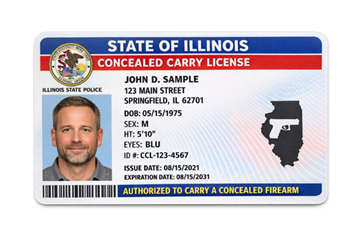
During that time, circumstances may have changed. A person could have become legally prohibited from possessing firearms in situations including, but not limited to
- Charged with or convicted of a disqualifying offense
- Had a protective order (justified or unjustified) issued against them
- Experienced mental health adjudications or inpatient hospitalizations affecting eligibility
While many states require permit holders to report disqualifying events, not all do, and compliance varies. Illinois requires gun owners to have a “Firearm Owners Identification Card,” or FOID, which identifies them as firearm owners. Card holders are background checked 360 days a year (a few holidays are exempt) against the state criminal database and the mental health reporting database, which requires reporting if a person is hospitalized as an inpatient for a psychiatric reason, or is deemed by a mental health or law enforcement professional as a danger to themselves or others.
For instructors responsible for putting firearms in students’ hands during training, it is worth verifying that eligibility still exists.
Firearm Mentor also works within the mental health and aging community, teaching de-escalation skills. Over the years, several students have reached out regarding family members who were involved in such a disqualifying event.
For example, one student had a family member, who was a gun owner, and was hospitalized for suicidal tendencies. The hospitalized person was completely responsible, and told the student that they owned a firearm, where it was, and the combination of the safe, so the student could remove the firearm and conduct a legal transfer.
48 hours after the patient was discharged, the Illinois State Police knocked on their door, demanding the firearm be turned in. A call was placed to the student who had all of the appropriate paperwork and was in possession of the firearm. After a brief phone conversation and production of lawful transfer receipts, law enforcement left the premises within 15 minutes. The hospitalized individual did the right thing and followed the law.
Instructors Carry Liability and Safety Responsibilities
Firearms training environments require a high level of trust. Students are often working in close proximity, sometimes drawing from holsters, moving, or engaging in stress-based exercises.
If a student later turns out to be legally prohibited from possessing firearms—or worse, demonstrates violent or unstable behavior—the instructor and training organization may face significant legal questions in civil proceedings:
- Was reasonable due diligence performed?
- Were warning signs overlooked?
- Were safety protocols adequate?
While background checks cannot prevent every problem, they demonstrate a good-faith effort to maintain a responsible training environment.
Protecting Other Students
Students attending concealed carry courses often come from diverse backgrounds. Many are brand-new gun owners seeking confidence and safety training.
These students expect the environment to be:
- Safe
- Professional
- Responsible
Knowing that an instructor takes steps to vet participants increases trust and professionalism in the classroom. Vetting participants does not stop at a background check. Assessing their understanding of basic firearms rules is also paramount. Firearm Mentor had a student where while in the range with bullet resistant glass in between the lanes, could not comprehend to keep their finger off the trigger, and continually looked at the handgun sideways, pointing it at the range owner in the next lane.
After several reminders and redirections, the lesson was politely ended. Family members were contacted and informed that this student should never be near a firearm, to which the family agreed. It was a difficult, but necessary conversation.
This becomes particularly important in advanced or defensive training where students may practice dynamic drills, close-quarters scenarios, or decision-making under stress. In summary, professional instructors should value safety above income. Saving lives is not a cash grab.
Maintaining the Reputation of the Training Community
The firearms training industry depends heavily on public trust. One highly publicized incident involving a poorly vetted student can damage not only an individual instructor’s reputation but also the credibility of responsible training nationwide.
Demonstrating strong safety practices—including reasonable student vetting—helps reinforce the message that firearms education prioritizes responsibility above all else.
This is especially important in states where firearm ownership and training are closely scrutinized.
What “Background Checks” Can Look Like for Instructors
Not every instructor will conduct formal background checks, and laws and privacy considerations vary by state. However, instructors may consider reasonable screening practices such as:
- Verifying a valid concealed carry license or FOID card where applicable
- A google search of the student’s name and social media lookup
- Partnering with a background search company, which may incur a cost. A few dollars of prevention are well worth several hundred thousand dollars of liability.
- Requiring students to attest that they are legally eligible to possess firearms and will use them safety, while assuming liability for misuse, whether intentional or unintentional
- Including conduct and safety policies in registration agreements
- Reserving the right to refuse service if safety concerns arise
- Conducting additional vetting for advanced defensive or instructor-level courses
These steps can create a clearer standard of accountability while respecting privacy and legal boundaries.
A Culture of Responsibility
Responsible firearms ownership has always emphasized safety, accountability, and good judgment. Firearms instructors are uniquely positioned to model those values.
Implementing reasonable vetting measures—whether through background checks, documentation verification, or clear safety policies—signals to students and the broader community that training organizations take their responsibilities seriously.
Ultimately, the goal is simple: ensure that every training environment reflects the highest standards of safety and professionalism.
For instructors, that commitment begins long before the first round is fired.
In conclusion, Firearm Mentor’s motto, Remain Safe. Stay Sharp. Train for the Moment that Matters, doesn’t only apply to teaching physical safety. It is meant to be an all risk inclusive mantra.
About Marcus Melnick and Firearm Mentor:
Marcus Melnick is the founder of Firearm Mentor, a personal safety and firearm training program based in Illinois. He teaches responsible firearm ownership, concealed carry, and real-world decision-making for veterans, law enforcement, and everyday people who want to protect themselves and others.
More than 11,500 people have taken Firearm Mentor training and have stepped in during real emergencies, including helping prevent a mass shooting, stopping a sexual assault in progress, interrupting multiple armed robberies, and preventing a school arson attempt. These incidents reinforce his belief that preparation and responsible training can make an immediate difference when seconds matter.
Marcus focuses on practical instruction that blends safety, legal awareness, and situational judgment so students leave not just qualified, but confident in their ability to respond responsibly. His work centers on preparing everyday people to recognize danger early, make sound decisions under pressure, and act when it matters most.
Learn more about his training programs at FirearmMentor.com.
Share this post: