
Author: Lorraine Crescimanno

As an instructor, one of the most common questions I hear from women in concealed carry classes is: “What’s the best way for me to carry?” The honest answer is that there is no one-size-fits-all solution. Concealed carry for women often depends on body shape, lifestyle, comfort, clothing choices, and the ability to access the firearm safely and consistently.
What Is the Best Concealed Carry Method for Women?
Women often arrive at class using a wide variety of carry methods. I see them experimenting with everything from waistband, ankle, thigh and bra holsters to purses and athletic wear systems. Some are excellent choices, while others may need adjustment for safety or efficiency. Sometimes small wardrobe adjustments make a major difference. A sturdy belt, layered clothing, or purpose-designed concealed carry apparel can dramatically improve comfort and concealment. I also remind students that just because a carry method is comfortable does not automatically make it safe or effective. The key is finding a carry method that is safe, accessible, comfortable, and realistic for everyday life.
Go to ShootingClasses.com to search for concealed carry classes near you.
Safety is always the priority in any concealed carry class. While I understand women use many different carry methods in daily life, there are times when certain methods may be restricted during live-fire training.
For example:
- Unsafe holsters that collapse or fail to cover the trigger guard are not permitted
- Some off-body methods may be restricted during draw exercises
- Certain appendix setups may require additional safety considerations
- Fashion holsters that lack retention or stability are discouraged
The goal is to create a safe learning environment while helping students improve their setup.
Methods of Carry Commonly Seen in Class
Inside-the-Waistband Concealed Carry
Appendix (AIWB) and Inside The Waistband (IWB) are the most common and effective methods of concealed carry. The holster sits inside the waistband,
Advantages
- Excellent firearm retention
- Faster access during emergencies
- Better control of the firearm
- Easier to protect from unauthorized access
Disadvantages
- Can be uncomfortable depending on body type or clothing
- Women’s fashion often lacks supportive belts or structured waistlines
- Requires a quality holster and belt setup
Belly Bands and Athletic Wear Carry
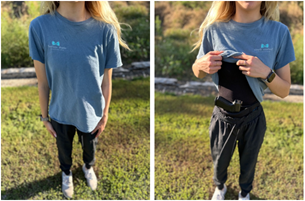
Popular among women who wear leggings, workout clothing, or outfits without belts.
Advantages
- Flexible for active lifestyles
- Works well with casual clothing
- Comfortable for many women
Disadvantages
- Slower draw speed
- Retention quality varies greatly
- Some models do not adequately protect the trigger guard
- Slow to reholster
Pocket Carry
Usually used with small firearms and a proper pocket holster.
Advantages
- Simple and discreet
- Easy for quick errands
- Comfortable for some clothing styles
Disadvantages
- Limited to very small firearms
- Slower access
- Pockets must remain free of other objects
Off-Body Carry 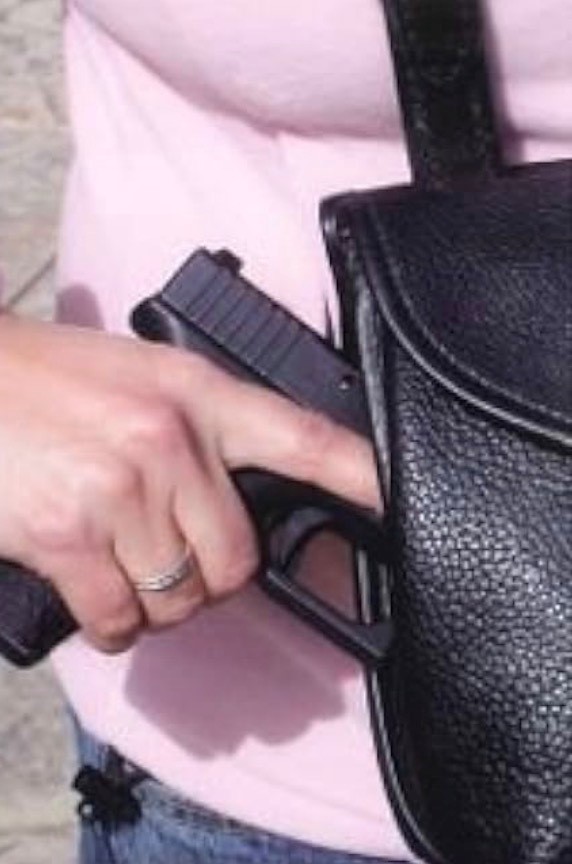
This is extremely common among women because it often feels more comfortable and convenient (Purse, Backpack, Fanny Pack, Tote Bag).
Advantages
- Easier to conceal larger firearms
- Comfortable when clothing options are limited
- No need for belts or specialized clothing
Disadvantages
- The highest risk of separation from the firearm
- Slower access under stress
- Purses are frequent targets for theft
- Requires constant awareness and control of the bag
On-Body vs. Off-Body Carry
One of the biggest discussions in women’s concealed carry classes centers around whether to carry on-body or off-body.
If a firearm is on your body, it is generally:
- More secure
- Faster to access
- Easier to defend from theft
- Less likely to be forgotten or left behind
On-body carry also forces consistency. A firearm locked in a purse does little good if the purse is left in a shopping cart, hanging on a chair, or sitting in a vehicle.
That said, real life matters. Some women work in professional attire, wear dresses regularly, or have medical or physical limitations that make on-body carry difficult. In these cases, off-body carry may be the most realistic option.
If choosing off-body carry, I strongly recommend:
- Using a dedicated concealed carry purse or bag
- Keeping the firearm in a dedicated holster compartment
- Never place loose items in the firearm compartment
- Maintaining physical control of the bag at all times
- Practicing drawing from the bag regularly
Concealed Carry Safety Tips for Women
Invest in a Quality Holster
A proper holster should:
- Completely cover the trigger guard
- Retain the firearm securely
- Stay in place during movement and drawing
- Allow safe reholstering
Final Thoughts: Choose a Method You Can Carry Consistently
The best firearm for self-defense is the one you actually carry. Everyday carry should balance comfort, accessibility, safety, and consistency. A smaller firearm carried daily is more useful than a larger firearm left at home.
Since most ranges will not allow holster draw, women should practice daily dryfire:
- Drawing safely from concealment
- Accessing the firearm while seated
- Moving with their carry setup
- Clearing cover garments efficiently
For concealed carry dryfire training systems, see: www.mantisx.com/ref?id=481
Here is a sample dryfire drill: https://www.youtube.com/watch?v=6PNxxEt4nHw
How to dryfire: https://www.shootingclasses.com/blog/posts/dry-fire-training-how-to-practice-safely/
Concealed carry is only one part of personal safety. Situational awareness, avoidance, and confidence are equally important. In many situations, awareness can prevent the need ever to draw a firearm.
Ready to build confidence with concealed carry?
Explore concealed carry classes near you and continue developing safe, consistent training habits:
https://www.shootingclasses.com/concealed-carry-classes/.
Share this post: